

How to Stop Seeking Validation and Start Living Life on Your Own Terms

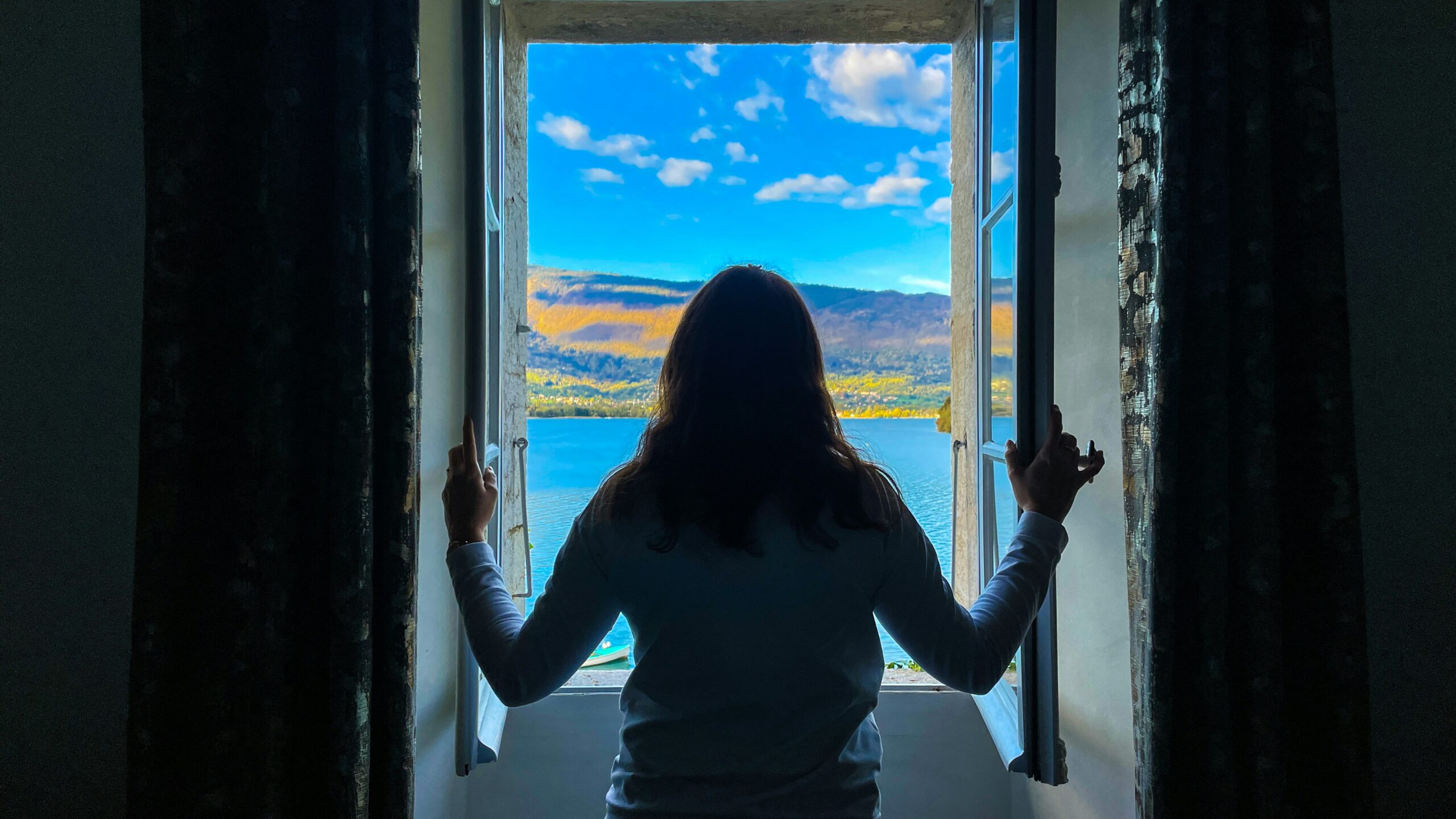
Learning how to stop seeking validation starts with noticing this: somewhere along the way, you learned to wait for permission.
Wait until you’re ready. Wait until someone believes in you enough to say so out loud. Wait until the conditions are right, the timing is better, the fear is smaller. Wait until someone who seems more qualified, more experienced, more certain than you gives you the nod — the invisible permission slip that says: yes, you. You’re allowed to begin.
And so you wait. Brilliantly, patiently, sometimes for years. Preparing for a moment that keeps moving forward just as you approach it. Refining a plan that never quite feels finished. Living in the anteroom of your own life, convinced that the main room is just one more thing away.
Nobody is coming with the permission slip. That’s the thing nobody tells you. And the day you truly understand that — not intellectually, but in your bones — is the day everything changes.
Where the Waiting Begins
It starts early. In classrooms where you raised your hand and waited to be called on. In homes where approval was conditional and love came with requirements. In a culture that rewards credentials over courage, pedigree over potential, and the appearance of certainty over the reality of honest trying.
We are trained, from the very beginning, to look outside ourselves for the signal that we’re allowed to go. And so we spend our adult lives doing exactly that — scanning the faces of people around us, waiting for the expression that says you’re ready now. Waiting for the success story that justifies the attempt. Waiting for the version of ourselves that feels confident enough to deserve the life we actually want.
But here is what that waiting actually costs — and it costs more than most people are willing to count.
The Price of the Waiting Room
Every day spent waiting is a day the version of you that could exist does not. The book unwritten. The business unlaunched. The conversation unsaid. The life unlived in exactly the shape it was meant to take.
But there is a deeper cost than the missed opportunity. It is what waiting does to your belief in yourself. Because every time you don’t act — every time you choose the waiting room over the door — some quiet part of you registers it. Not dramatically. Just a small, steady accumulation of evidence that you are someone who almost does things. Someone who prepares beautifully and executes rarely. Someone whose potential has an expiration date that keeps getting extended but never quite arrived.
Psychologist Julian Rotter named this dynamic in 1954 with the concept of locus of control — the degree to which you believe outcomes in your life result from your own actions versus outside forces. Repeated inaction shifts this belief gradually, in increments too small to notice individually. Each unstarted project reinforces the idea that circumstances, not choices, run your life, which makes the next act of waiting feel more justified than the last. Research since then has consistently linked a stronger internal locus of control with higher persistence and lower rates of anxiety and depression, largely because believing your actions matter is what makes trying again feel worthwhile.
The waiting room is comfortable. That’s why it’s dangerous. It feels responsible. It feels like patience. It feels like wisdom. And it is slowly, without ever announcing itself, stealing the life that was always meant to be yours.
Why External Validation Never Quite Fills the Gap
Even when the approval does arrive — the praise, the promotion, the applause you’d been secretly hoping for — it rarely produces the lasting relief people expect. Researchers studying self-determination describe why: external validation satisfies a need temporarily but doesn’t build what psychologists call autonomous motivation, the kind that comes from acting in line with your own values rather than performing for an audience. Approval-based confidence has to be re-earned constantly, from whoever’s opinion you’ve outsourced your sense of worth to that week. It’s a currency that depreciates the moment you stop actively collecting it.
Self-generated permission works differently because it doesn’t depreciate the same way. It’s not immune to doubt — doubt still shows up — but it doesn’t require topping up from an external source every time it runs low. This is the practical reason “give yourself permission” isn’t just a nice phrase. It’s a structurally different, more durable source of the same thing people are trying to get from validation in the first place.
How to Stop Seeking Validation: The Truth About Permission
No one who built something that mattered waited until they felt ready. Read that again.
They started afraid. They started uncertain. They started with less than they thought they needed and more than they gave themselves credit for. They started because they finally understood — through experience or exhaustion or a moment of radical clarity — that ready is not a feeling that arrives before you begin. It is a feeling that emerges, slowly and imperfectly, from the act of beginning itself.
The permission you’ve been waiting for was always yours to give. It was never in anyone else’s hands. Not your parents’, not your peers’, not the market’s or the algorithm’s or the voice in your head that sounds suspiciously like every critic you’ve ever encountered. It was yours. It has always been yours.
And the moment you give it to yourself — genuinely, without conditions, without waiting for the fear to subside first — something shifts. Not the circumstances. Not the odds. But the relationship you have with your own life. You stop being a passenger and start being the one who decides where this goes.
Tracing Validation-Seeking Back to Where It Started
For a lot of people, this pattern has a specific origin point worth naming rather than treating as a vague personality trait. Children whose love or attention from caregivers felt conditional — earned through achievement, good behavior, or being convenient rather than given freely — often learn early that being valued requires performance. That lesson, absorbed young enough, doesn’t stay confined to childhood. It generalizes into adult life as a persistent scan for the next signal of approval, applied to bosses, partners, followers, and strangers with the same underlying logic that once applied to a parent.
Naming this origin isn’t about assigning blame retroactively. It’s about recognizing that the pattern was adaptive once — it likely helped secure something real in a specific context, a long time ago. It’s just no longer necessary in the same way now, and continuing to run it as an adult applies a childhood survival strategy to situations that don’t actually require it anymore.
The Day Is Today
Not when things settle. Not when you feel more confident. Not when you’ve done a little more research or saved a little more money or gathered a little more evidence that you deserve to try.
Today. With exactly what you have. Knowing exactly what you don’t know. Feeling exactly what you feel — including the fear, including the doubt, including the very reasonable voice that says this might not work.
It might not. That’s true. But here is what is also true: it definitely won’t if you stay in the waiting room. And a life spent in the anteroom of your own potential is not the life you were built for.
You were built for the door. For the step. For the moment of choosing yourself so completely that the waiting finally ends and the living finally begins.
Give yourself permission. Right now. Not tomorrow. Now.
The life on the other side of that decision has been waiting for you far longer than you’ve been waiting for it.
And if the old habit shows up again tomorrow — the scan for approval, the urge to check whether it’s safe to want this — notice it without treating it as proof you failed. Old patterns don’t disappear the first time you name them. They just start losing a little of their authority every time you act anyway, until one day acting anyway is simply what you do, without the argument first.
Your Growth. Your Legacy.
FAQ
Q: How do I stop seeking validation from others?
A: Start by recognizing that the permission you’ve been waiting for was always yours to give. Take one action today — without waiting for approval — and let the result prove to you that you didn’t need anyone’s permission to begin.
Q: Why do I keep waiting for the right moment to start?
A: Waiting for the right moment is a form of fear dressed as wisdom. The right moment is not a condition — it is a decision. Nobody who built something meaningful waited until they felt completely ready.
Q: How can I build self-confidence without external validation?
A: Confidence is built through action, not through preparation. Every time you act despite doubt, you create evidence that you are capable. That evidence, accumulated over time, becomes unshakeable self-belief.
Q: Why does approval never feel like enough, even when I get it?
A: External validation satisfies the need only temporarily because it doesn’t build the internal sense that your actions align with your own values — it’s a currency that has to be constantly re-earned. Self-generated permission, by contrast, doesn’t depreciate the same way, which is why it produces more stable confidence over time.