

How to Use Technology Mindfully and Reclaim Your Focus in 2026

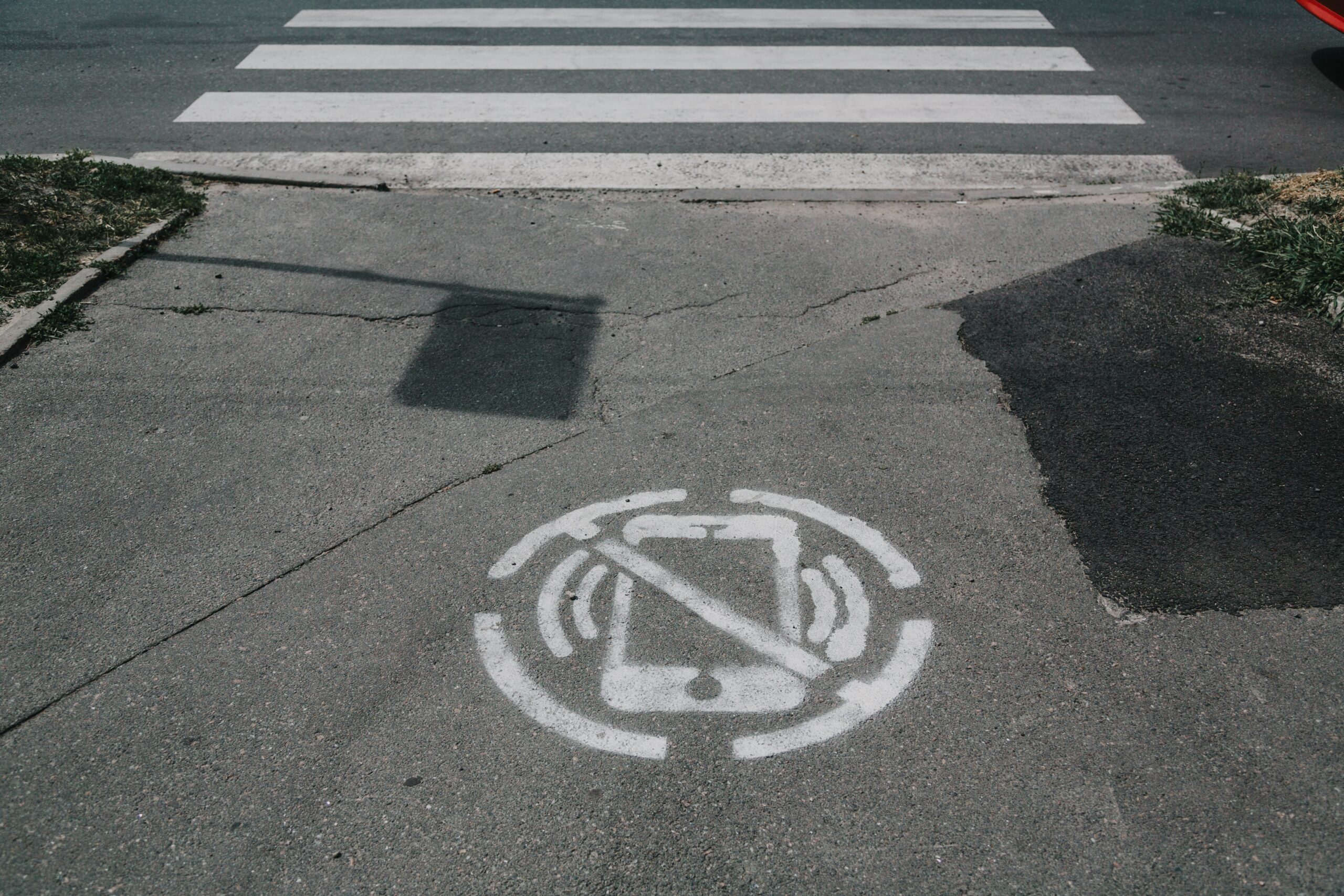
Most of us wake up and reach for our phones before our eyes have fully adjusted to the light. Before the day has even begun, our attention is already spoken for — pulled toward notifications, headlines, and other people’s priorities. If you’re serious about personal growth, learning how to use technology mindfully isn’t optional. It’s foundational.
Your attention is your most finite and valuable resource. Every app, every alert, every infinite scroll is engineered to claim it. In 2026, with AI-powered feeds that know your psychology better than you do, protecting your focus has become an act of genuine self-discipline.
Why Your Attention Is the New Currency
Social media companies, streaming platforms, and news outlets don’t sell products — they sell your attention to advertisers. The moment you understand this, your relationship with technology fundamentally changes.
Studies consistently show that the average person spends over 6 hours per day on screens. That’s 42 hours per week — more time than most people spend at work. The question isn’t whether technology is taking your time. It’s what you’re giving up in exchange. Deep work. Creative thinking. Meaningful relationships. Physical health.
What “Mindful Tech” Actually Means
Mindful tech is not about rejecting your devices or going off-grid. It’s about one thing: intention. The difference between mindful and mindless tech use comes down to a single question: Am I choosing this, or is it happening to me?
The “happening to you” part isn’t an accident of willpower — it’s engineered. Most social apps use what behavioral psychologists call a variable ratio reinforcement schedule, the same reward structure that makes slot machines effective: you don’t know exactly when the next like, message, or interesting post will appear, so you keep checking. B.F. Skinner documented this pattern in the 1950s using pigeons and levers, and it remains one of the most reliable ways to produce a compulsive checking behavior in any species, humans included. Understanding this doesn’t require more self-discipline — it requires changing the environment so the unpredictable reward is harder to trigger by accident.
- Mindless: You open Instagram because you’re bored, and 40 minutes disappear.
- Mindful: You open Instagram for 10 minutes to connect with your community, then you close it with intention.
How to Use Technology Mindfully: 5 Practical Strategies
1. Design Your Phone’s Home Screen With Intention
Remove every app that exploits your impulses from your home screen. Move social media apps to a secondary folder. Keep only tools that serve your goals at the front. Your environment shapes your behavior more than your willpower ever will.
This matters more than it sounds because most phone checking isn’t a decision — it’s a reflex triggered by an idle hand and a familiar icon in a familiar spot. Change the spot, and you interrupt the reflex before it completes. People who try this consistently report the same thing: they still occasionally reach for the phone out of habit, unlock it, and then genuinely forget what they were looking for — a small but telling sign that the behavior was never really about the app in the first place, just the muscle memory of reaching for it.
2. Set “Office Hours” for Social Media
You wouldn’t answer work emails at 3am. Treat social media the same way. Choose specific windows — say, noon and 6pm, 20 minutes each — and access apps only during those times. This single change can reclaim hours of your week within the first few days.
The reason a fixed window works better than “I’ll just check less” is the same reason budgets work better than “I’ll just spend less”: a vague intention has no edge to catch on, while a specific window gives your brain a clear boundary to hold against. “Less” is negotiable in the moment, in a way a scheduled 6 p.m. slot simply isn’t.
3. Curate Your Feed Like a Garden
Unfollow accounts that trigger comparison, anxiety, or mindless scrolling. Follow accounts that educate, inspire, and challenge you positively. Your feed is not something that happens to you — it is something you build.
The comparison effect has a name: social psychologist Leon Festinger described it in 1954 as social comparison theory, the idea that people evaluate their own worth largely by measuring themselves against others. Social feeds intensify this because they show a curated highlight reel, not an average day, which skews the comparison unfairly. Studies on social media use have repeatedly linked heavy, passive scrolling (watching without interacting) to lower mood, more strongly than active use like messaging friends directly. The fix isn’t quitting — it’s shifting from passive consumption to active, intentional engagement.
4. Use Technology to Grow, Not Just Consume
For every hour of passive consumption, aim for one block of active use: listen to a podcast that teaches something, take an online course, write, create, or connect meaningfully. Technology becomes a powerful ally the moment you shift from consumer to creator.
5. Install Friction Between You and Bad Habits
Use app timers. Turn off all non-essential notifications. Keep your phone out of your bedroom. Log out of apps after each use so opening them requires a conscious choice. Friction is your friend.
A simple non-smartphone alarm clock removes the biggest excuse for bringing your phone into the bedroom in the first place.
The Framework Behind All of This: Digital Minimalism
Computer science professor Cal Newport gave this whole approach a name: digital minimalism, the philosophy of using technology only in ways that directly support things you deeply value, and being ruthless about cutting the rest — not because technology is inherently bad, but because most people adopt new tools without ever deciding what role they should play, and end up serving the tool’s business model instead of their own goals.
His research method for adopting this is blunt on purpose: a 30-day break from every optional technology, followed by a deliberate reintroduction of only the tools that pass a specific test — does this serve something I genuinely value, and is this the best way to serve it? Most people who try this discover that the majority of their app usage fails that test immediately, not because the apps are worthless, but because they were never chosen in the first place. They simply arrived, pre-installed or socially expected, and never got evaluated.
You don’t need the full 30-day version to benefit from the underlying question. Pick one app right now and ask honestly: if I had to reinstall this on purpose today, having never used it before, would I? For a surprising number of apps on most people’s phones, the honest answer is no — they’re just still there out of inertia, not intention.
Why Evening Screens Cost You More Than They Seem To
There’s a specific mechanism worth knowing if your mindful-tech efforts stop at daytime habits: screens emit blue-heavy light that suppresses melatonin production more than warmer light does, and melatonin is the hormone that signals to your body that it’s time to wind down. An hour of scrolling in bed doesn’t just cost you that hour — it pushes back your body’s internal signal to prepare for sleep, which is part of why “I was only on my phone for twenty minutes” so often turns into ninety minutes of restless, unsatisfying half-sleep afterward. The content doesn’t even need to be stimulating for this to happen; the light alone does real work independent of what you’re actually looking at.
Protect Your First Hour — It Changes Everything
The single most impactful change you can make today: don’t touch your phone for the first 60 minutes after waking up. Your brain wakes up in a highly suggestible, creative state. The moment you check your phone, you replace that clean slate with other people’s priorities.
Use that first hour for movement, journaling, reading, meditation, or planning your day. You’ll notice a difference in focus and mood within the first week.
The Real Upgrade Is in Your Mindset
No app will save you from a reactive mindset. Learning how to use technology mindfully is ultimately an inside job. It requires building your capacity to sit with boredom, tolerate discomfort, and choose long-term gain over short-term stimulation.
Technology isn’t the enemy. It becomes your most powerful ally the moment you decide to be its master — not its servant. None of these five strategies require perfection, and none of them work forever once set up — apps update, habits drift back, and the phone finds its way back onto the nightstand eventually. Treat this as maintenance, not a one-time fix, and revisit your setup every few months the same way you’d revisit a budget.
FAQ
Q: How do I start using technology more mindfully?
A: Start with one change: don’t touch your phone for the first 60 minutes after waking. That single habit protects your most creative, focused mental state of the day from being hijacked by other people’s priorities. After one week, add a second change — set specific “office hours” for social media. Build gradually.
Q: How much screen time is too much?
A: The issue is less about total time and more about intentionality. Six hours on screens building a business or learning a skill is very different from six hours of passive scrolling. Ask yourself: am I choosing this, or is it happening to me? That question is more useful than any arbitrary time limit.
Q: Can mindful technology use actually improve my focus?
A: Yes — significantly. Every time you resist the pull of a notification or close an app intentionally, you strengthen your capacity for focused attention. Over time, this practice rebuilds the neural circuits for deep work that constant distraction has eroded. The improvement in focus and mental clarity typically becomes noticeable within two to three weeks of consistent practice.
Q: Should I just delete social media apps entirely?
A: Not necessarily. Deletion works for some people, but the deeper skill is deciding on purpose what role each app plays in your life, then designing around that decision — through office hours, home screen placement, or notification settings. Deleting an app you never evaluated just replaces one unconsidered default with another. The evaluation is the actual work; deletion is only one possible outcome of it.