

How to Build a Habit That Actually Sticks

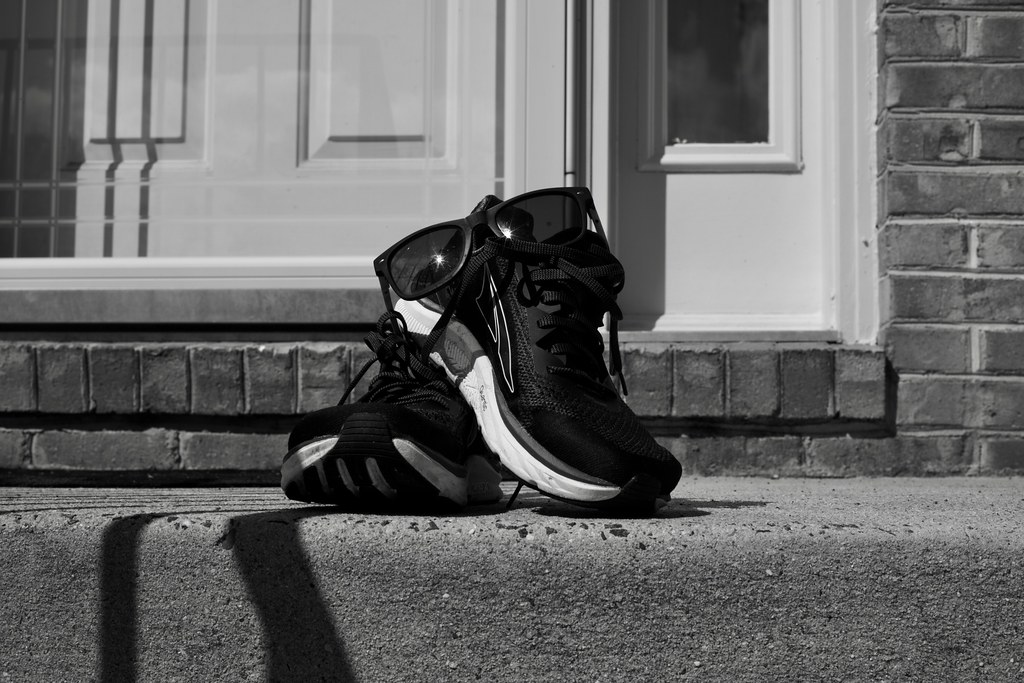
How many habits have you “started” this year? Not researched, not planned, not bought the app for — actually started. Now: how many of those are still running today, three, four, six months later?
For most people that number drops fast. Not because they lack discipline. Because almost everyone builds habits backwards, leaning on motivation and willpower to carry something that was never designed to run on either.
Here’s how habits that actually last get built — based on what the research says happens in your brain during the process, not on another 21-day myth that was never true to begin with.
The Number Everyone Gets Wrong
You’ve probably heard it takes 21 days to build a habit. That number has no real research behind it — it traces back to a 1960 book by a plastic surgeon who noticed patients took about three weeks to adjust to a new face or a missing limb, and somehow that observation mutated into a universal habit-formation rule with zero data to support it.
The actual research tells a very different story. A 2010 study by health psychologist Phillippa Lally and colleagues at University College London tracked 96 people trying to build a new habit — like eating fruit with lunch or running for 15 minutes daily — and measured how long it took before the behavior became automatic. The average was 66 days. But the range was enormous: anywhere from 18 days to 254 days, depending on the person and the habit. There is no universal number. There’s only your number, for this specific habit, and it’s probably longer than 21 days.
That single fact reframes almost everything about why habits fail. People quit around day 20 not because the habit didn’t work, but because they were told it should already feel automatic by then — and when it doesn’t, they read that as proof of personal failure instead of proof the popular number was wrong the entire time.
Why Willpower Was Never a Real Strategy
Willpower functions like a muscle that fatigues with use, according to a substantial body of self-regulation research — meaning it’s a finite resource you’re drawing down all day, on decisions that have nothing to do with your habit: what to eat, what to say in a difficult conversation, whether to answer that email now or later. By the time you get to your new habit in the evening, the willpower tank is frequently closer to empty than full.
Motivation vs. discipline covers part of this problem, but there’s a layer underneath both: habits that depend on willpower are habits designed to fail on your worst days, which are exactly the days that determine whether the habit survives long-term. A system that only works when you’re at your best isn’t a system — it’s a hope.
The Habit Loop: What’s Actually Happening
Behavioral research consistently points to the same three-part loop underlying every habit, automatic or not: a cue that triggers the behavior, a routine that is the behavior itself, and a reward that tells your brain the loop was worth repeating. Miss any one of the three and the habit doesn’t stick, no matter how much you want it to.
1. The cue has to be specific and impossible to miss
“I’ll meditate more” has no cue. Your brain has nothing to grab onto — no moment that says “now.” “I’ll meditate for five minutes right after I pour my morning coffee” has a cue built directly into a behavior you already do automatically every day. Attach the new habit to an existing one, and the existing habit does the reminding for you.
2. The routine needs to be smaller than you think it should be
Most new habits fail because the opening version is too ambitious. An hour at the gym, a full page of journaling, thirty minutes of meditation — all reasonable-sounding goals that are also exactly demanding enough to get skipped on a busy or low-energy day. Shrink the starting version until skipping it feels almost embarrassing: five minutes, one page, ten squats. You can always do more once it’s running. You can’t build consistency on a version that’s already too heavy to lift most days.
3. The reward has to be immediate, not theoretical
“I’ll be healthier in a year” is a real reward, but it’s too far away to reinforce today’s specific repetition. Your brain needs something closer: the satisfaction of checking a box, a specific feeling you notice right after, even just acknowledging out loud that you did it. Distant rewards motivate the decision to start. Immediate rewards are what actually cement the loop that keeps it running.
Why Missing One Day Isn’t the Real Danger
The Lally study also found something that contradicts a lot of popular habit advice: missing a single day didn’t meaningfully affect the eventual habit-formation process. One missed day is noise, not failure. What actually derails habits is a specific pattern — missing once, feeling like the streak is broken beyond repair, and treating that as permission to stop entirely.
The habit doesn’t die on the day you miss it. It dies on the second missed day, chosen because the first one already felt like proof it wasn’t going to work. Protect the second day, not the first one, and most habits survive far longer than people expect.
Stacking Habits Without Overloading Yourself
Once one habit is genuinely automatic — meaning you do it without deciding to, the way you brush your teeth — it becomes a stable anchor for the next one. This is the practical version of what’s sometimes called habit stacking: new habit attached to an already-automatic one, rather than attached to willpower or a vague time of day.
Staying consistent when you don’t feel like it gets dramatically easier once you’re stacking onto something automatic, because the cue is no longer something you have to remember — it’s something your day already does for you.
The Habit-Tracking Trap
Tracking can help, but it can also become its own source of failure if the tracker itself turns into one more thing that has to be perfect. A missed log entry starts to feel like a missed habit, even when the actual behavior happened. If you use a tracker, keep it simple enough that logging takes less effort than the habit itself — a basic paper habit tracker or a single recurring note works better for most people than an elaborate app with streaks, badges, and pressure built into the design.
Design Your Environment So the Habit Needs Less From You
Willpower and motivation both live inside you, which means they fluctuate with your mood, your sleep, and your stress levels. Your environment doesn’t. A gym bag already packed by the door, a book on your pillow instead of your phone charger, a journal left open on the kitchen table — each of these removes a small decision point where the habit could otherwise get talked out of happening.
This works in the opposite direction too. If a habit you’re trying to break has an easy, visible cue — the phone on the nightstand, the snacks on the counter at eye level — moving that cue out of immediate reach does more for breaking the pattern than any amount of promising yourself you’ll resist it tonight. Behavioral researchers sometimes call this “choice architecture”: you’re not relying on being strong enough to resist temptation, you’re redesigning the room so the temptation requires more effort to reach than the habit you actually want.
The practical version: for every habit you want to build, ask what friction currently stands between you and doing it, and remove one piece of that friction today. For every habit you want to break, ask what friction is currently missing, and add one piece of it back. Small changes to the physical setup often outperform large amounts of willpower spent fighting the same environment every single day.
What This Looks Like in Practice
Picture the habit you’ve tried and dropped the most times. Now picture the smallest possible version of it — smaller than feels like it counts. Attach it to something you already do without thinking. Give yourself an immediate, tiny acknowledgment the moment you do it. Expect at least one missed day somewhere in the first month, and plan in advance that a missed day means picking it back up tomorrow, not starting over from zero.
That’s not a lesser version of habit-building. That’s the actual mechanism, stripped of the willpower mythology and the 21-day myth that never had real research behind it in the first place.
The Identity Shift That Makes Habits Stop Feeling Like Work
There’s a difference between “I’m trying to exercise more” and “I’m someone who exercises.” The first is a goal you’re chasing, which means every session is judged against whether it moved you closer to something you don’t have yet. The second is a description of who you already are, which means every session is just further evidence of a fact rather than a step toward a distant outcome.
This shift doesn’t happen through affirmations or repeating a sentence in the mirror. It happens through repetition of the small version of the habit — each time you do the five-minute version, you’re casting a small vote for the identity, and identities built from actual repeated evidence are far more durable than identities declared in advance and never backed up by behavior.
Frequently Asked Questions
How long does it really take to build a habit?
Research points to an average of about 66 days, though the real range spans from roughly 18 to 254 days depending on the person and the specific habit. There’s no single universal number — the popular 21-day claim has no solid research behind it.
What should I do if I miss a day?
Pick the habit back up the next day without treating the miss as a failure. Research on habit formation suggests a single missed day doesn’t meaningfully disrupt the process — what actually derails habits is missing a second consecutive day after treating the first miss as proof the habit isn’t working.
Why do habits that rely on willpower usually fail?
Willpower is a limited resource that gets drawn down throughout the day by unrelated decisions, so habits that depend on having willpower left over tend to fail specifically on high-stress or low-energy days — which are often the exact days that determine whether a habit survives long-term.
Start Smaller Than Feels Necessary
You don’t need more discipline. You need a version of the habit small enough to survive your worst days, attached to something you already do automatically, with a reward close enough to actually reinforce the loop. Build it that way, and the habit stops needing your motivation at all — which was the entire point from the start.